
Finance Minister Nirmala Sitharaman has brought down the budgetary allocation for the fertiliser subsidy for FY21 to Rs 71,309 crore, from the RE of Rs 79,998 crore for FY20, while increasing food subsidy to FCI through "ways and means advance" to Rs 50,000 crore for FY21, from Rs 36,000 crore in RE for FY20, and under the National Food Security Act (NFSA) to Rs 77,982 crore, from Rs 75,000 crore.
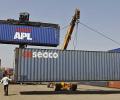
With exporters' claim for over five months still pending, liquidity has been wiped out and the process of finalising new contracts has been held up.

The Asean secretariat hopes the meet may be able to iron out existing wrinkles raised by India. Since there had been no significant progress on the matter over the past two years on most issues, New Delhi is yet to decide on the invite.

'I suggest a cut in the GST rates and an infusion of Rs 1.2 trillion into the economy in six months.'
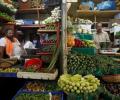
While rising food inflation is a matter of grave concern for a significant chunk of the population and for policy makers as well, it marks a turnaround in the fortunes of the farmer, reports Sanjeeb Mukherjee.

Spurring the economy, currently in the throes of a slowdown, remains the prime focus for most ministries, but the government is also looking to make women's welfare and environmental protection key to policymaking in this term.
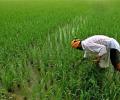
A pick-up in farmer income could have a cascading impact on the rural economy, though agriculture is becoming a smaller part of India's overall rural incomes.
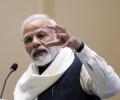
Starting today, Modi and top officials in the Prime Minister's Office will be briefed by various central ministries and departments on their plans as well as agenda for the next five years. They will also apprise the PMO of the work they have done so far in realising the agenda of government's second term in office.

In 2009, the UPA government, had announced a slew of measures to boost liquidity in NBFCs. These included a scheme for providing liquidity support to NBFCs having assets size of over Rs 100 crore through a SPV.
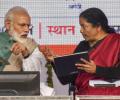
In the 2020-21 Budget, the prime minister and the finance minister are keen to stamp their narrative, after various rollbacks following the previous Budget, said top government sources. Besides the scheduled meetings, the sources said, the Prime Minister's Office is expected to hold several meetings with top secretaries and officials on various ongoing schemes, their performance and also how some of them could be tweaked for better results.

Banks will also consider requests from MSMEs for restructuring their stressed standard assets. So far, only 25 per cent of the around 1 million eligible MSMEs have taken benefit of the RBI's special dispensation.
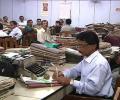
While manufacturing firms cut jobs for the first time in 20 months to sharply reduce costs, services providers continued their hiring spree.

India exported $102 million worth of dehydrated onions in 2018-19.

Though the NITI Aayog did not give its estimates for the required GDP growth at constant prices, economists pegged it at 9 per cent, a feat not seen since the GDP series was revised with 2011-12 as the base year.

Among the major ones are fewer restrictions on market access for US medical device manufacturers, as well as access for other key products.
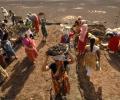
Sources said the rural development ministry has sought an additional Rs 20,000 crore for MGNREGA for 2019-20 over and above the budgeted Rs 60,000 crore for 2019-20. Though, all of the PM-KISAN savings may not be transferred to fund MNGREGA's extra needs, sources said a part of this could be transferred.

The high point of the trip will be Goyal's meeting with US Trade Representative Robert Lighthizer on November 13, which is expected to see the USTR push India towards lower import duties in a broad range of areas.

Initially, private buyers will be able to make bulk purchases on Government e-marketplace, it will subsequently be broadened to small-ticket buying as well.
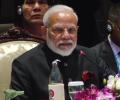
The agenda prepared by ministers will be discussed by Prime Minister Narendra Modi and other RCEP leaders in Nonthaburi, a city north of Bangkok, on November 4, the official deadline to close talks.

The report by the High Level Advisory Group said India stands to benefit even more when the US and China are locked in a global trade war.
 © 2026 Rediff.com - Investor Information - Advertise with us - Disclaimer - Privacy Policy - Sitemap - Feedback - About us - Terms of use - Grievances